Logbook: Economy
White Paper 13: The 1:500 Parity Ratio Modeling Preventative Footwear as Durable Medical Equipment to Mitigate Acute Trauma Liabilities
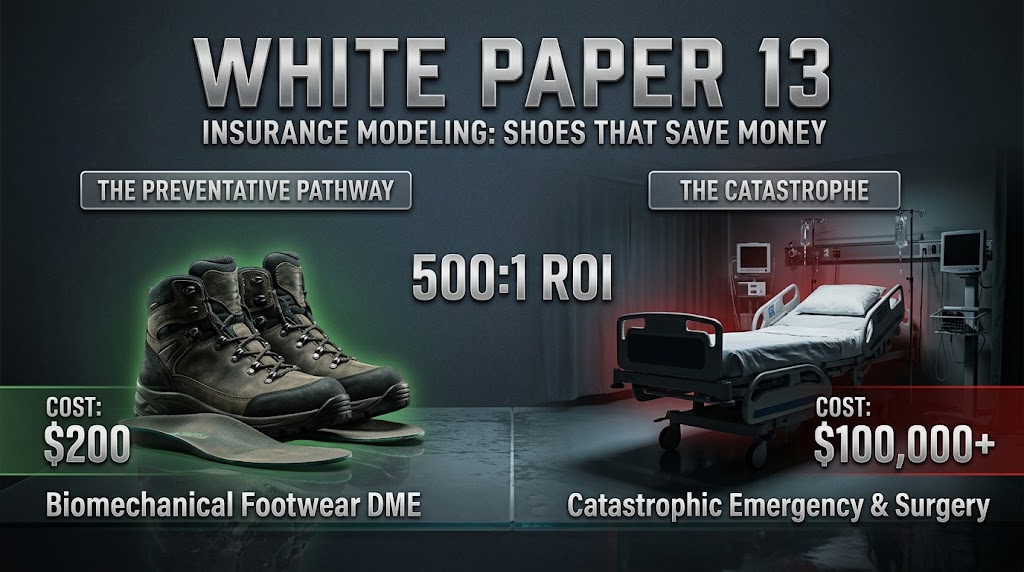
Title: Biomechanical Footwear as Essential Durable Medical Equipment: A Cost-Benefit Analysis of Preventative Orthopedic Coverage in Mitigating Falls, Emergency Admissions, and Catastrophic Healthcare Expenditure
Target Audience: Centers for Medicare & Services (CMS), Private Payer Actuarial Committees, State Medicaid Directors, Value-Based Care Policy Analysts
Domain: Health Economics, Biomechanics, Injury Epidemiology, Health Policy
1. Executive Summary
Falls among older adults and individuals with neurological, musculoskeletal, and sensory impairments constitute an under-managed financial and structural liability within the United States healthcare apparatus. Current national health expenditures attributable to falls exceed $50 billion to $80 billion annually, with more than 70% of those costs absorbed by public payers (Medicare and Medicaid).
A critical structural defect in current healthcare reimbursement policy is the statutory exclusion of non-diabetic therapeutic footwear. While Medicare and commercial payers comprehensively fund high-cost rigid bracing (such as Ankle-Foot Orthoses / AFOs) and post-traumatic acute surgical reconstructions, they categorize the foundational mechanical interface—the shoe—as a non-covered “personal convenience item,” unless tied exclusively to a diabetic metabolic diagnosis (HCPCS A5500 series).
This white paper models the actuarial and clinical outcomes of introducing a standardized, restricted Durable Medical Equipment (DME) Footwear Formulary offering a $200 annual allocation for verified, functional, torsionally stable footwear. Assuming an empirical 25% self-selected utilization rate among an insured cohort of 1,000,000 lives and a conservative 10% reduction in mechanical fall incidence, the policy generates:
- Gross Preventative Capital Outlay: $50,000,000 annually.
- Direct Acute Care and ER Savings: $125,000,000 annually.
- Net Annual Liquidity Dividend: $75,000,000 per 1,000,000 covered lives (a 2.5:1 Return on Investment in Year 1).
- The “One-for-500” Parity Ratio: The avoided direct surgical and post-acute cost of a single catastrophic trimalleolar or femoral fracture ($100,000) fully underwrites the preventative footwear allocation for 500 vulnerable individuals.
2. Problem Statement & Regulatory Defect
2.1 The Actuarial Cost of Acute Falls and Emergency Over-Utilization
Falls represent the leading cause of non-fatal and fatal injury among adults aged 65 and older, as well as the primary driver of preventable trauma admissions across populations with hereditary motor-sensory neuropathies (e.g., Charcot-Marie-Tooth disease, Hereditary Neuropathy with Liability to Pressure Palsies [HNPP]), spinal cord pathologies, and post-arthrodesis balance deficits.
- Emergency Department (ED) Volume: Over 3.0 million older adults are treated in hospital emergency departments annually for fall-related injuries.
- Inpatient Escalation: Roughly 800,000 fall patients per year require emergent inpatient admission, overwhelmingly driven by hip fractures (ICD-10 S72), traumatic brain injuries (ICD-10 S06), and complex trimalleolar/bimalleolar ankle fracture dislocations (ICD-10 S82).
- The ED Diversion Failure: When an individual with distal lower-extremity sensory loss or foot drop experiences sudden lateral instability, the lack of structural torsional resistance leads directly to mechanical failure. The emergency department is routinely utilized as an expensive, low-efficiency triage mechanism for balance-loss trauma that proper mechanical ground-coupling systematically prevents.
2.2 The Statutory Anomaly: The Diabetic Footwear Silo
The Medicare Therapeutic Shoe Bill (enacted under OBRA 1993) created HCPCS billing codes A5500 through A5514 (extra-depth, custom-molded shoes and inserts). However, the statutory language strictly limits reimbursement to patients with a primary diagnosis of Diabetes Mellitus (ICD-10 E08-E13) exhibiting specific secondary criteria (ulceration, callus, or diabetic neuropathy).
The pathway illustrates the coverage breakdown for patients experiencing peripheral neuropathy and loss of sensation:
- Metabolic Origin (Type 2 Diabetes): Falls under HCPCS A5500, with 100% of therapeutic depth shoes and custom inserts fully covered and reimbursed.
- Genomic Origin (HNPP / CMT / Spine): Deemed Non-Covered, resulting in a categorical exclusion and 100% out-of-pocket costs for the patient.
The Clinical Absurdity: A patient with hereditary neuropathy (such as PMP22 haploinsufficiency) or adjacent segment spinal biomechanical instability presents with identical or superior tissue fragility, mechanical shear vulnerability, and fall probability compared to a patient with diabetic neuropathy. Yet, because their neuropathy is genomic rather than metabolic, the claim is rejected at the electronic data interchange (EDI) clearinghouse level.
2.3 The “Brace Without an Enclosure” Disconnect
Insurers routinely authorize $1,500 to $5,000 for custom carbon-fiber or thermoplastic Ankle-Foot Orthoses (HCPCS L1900 series). However, standard commercial off-the-shelf footwear cannot accommodate the volumetric displacement of an AFO calf shell, footplate, and strut without creating severe focal pressure points. When patients are forced to purchase cheap, non-depth retail footwear, the brace compresses cutaneous nerves against rigid seams, precipitating secondary pressure-induced palsies, skin necrosis, or intentional abandonment of the brace-re-establishing catastrophic fall risk.
3. The Preventative Footwear Formulary (PFF) Model
To prevent cosmetic consumer leakage (subsidizing fashion athletic shoes or unsupportive footwear), the benefit must not function as an unrestricted open-retail cash stipend. Instead, it must be structured as a Vetted Biomechanical Formulary, modeled after a standardized Pharmacy & Therapeutics (P&T) formulary.
3.1 Closed Technical Specifications (Eligibility Matrix)
Footwear eligible for the $200 annual DME allowance must satisfy strict structural criteria verified by independent biomechanical testing:
- Torsional Rigidity: Must require longitudinal and midfoot torsional resistance; presence of a composite, steel, or high-modulus thermoplastic shank. This prevents midfoot collapse and high-energy lateral inversion rolling during mid-stance.
- Heel Counter Rigidity: Minimum Shore A hardness (>70) reinforced thermoplastic or multi-layer leather heel counter; zero medial/lateral collapse under 25 lbs force. This centers the calcaneus, stabilizes subtalar joint pronation/supination, and controls hindfoot sway.
- Volumetric Clearance: Minimum 3/8-inch to 1/2-inch internal extra-depth throughout the footbed; removable dual-layer spacer system. This accommodates internal AFO footplates and custom orthoses without dorsal or malleolar nerve compression.
- Outsole Architecture: Flared heel base with beveled or rockered heel strike; slip-resistant rubber compound (ASTM F2913 / F1677 coefficient of friction >0.5). This reduces initial ground-strike trip risk, promotes smooth sagittal roll-through, and stabilizes stance.
- Seamless Interior: Padded, seamless inner lining across dorsal, medial, and lateral metatarsal zones. This prevents cutaneous friction blisters, pressure palsies, and skin ulceration in insensate/demyelinated tissue.
3.2 Manufacturer Certification & Commercial Access
- Core Formulary (Tier 1): Pre-screened manufacturers whose dedicated stability/work/hiking lines natively meet the mechanical requirements (e.g., Brooks Addiction/Beast motion-control series, Merrell rigid-chassis Moab/Jungle Moc work series, Timberland PRO rigid-shank boots, Orthofeet/Drew medical depth shoes).
- Tier 2 (Commercial Evaluation): Consumer lifestyle manufacturers (Nike, Skechers, Reebok) may only enter the formulary if specific SKUs undergo accredited independent lab certification proving torsional stiffness and non-slip metrics.
- Point-of-Sale Execution: Claims clear via dedicated medical OTC flex debit cards or directly at in-network orthotics suppliers through restricted Universal Product Codes (UPCs) and National Drug Code (NDC)-equivalent product registries.
4. Health Economic & Actuarial Model
4.1 Cohort Architecture & The Breakage Principle
- Base Risk Pool: 1,000,000 covered commercial / Medicare Advantage / Managed Medicaid lives.
- Benefit Amount: Up to $200.00 per member per calendar year.
- Benefit Utilization Factor (Breakage): 25% (250,000 active participants; 750,000 non-participants).
In health plan design, preventative voluntary benefits exhibit a high breakage rate (unclaimed funds). The 25% of subscribers who actively navigate benefit portals to acquire rigid-shank, motion-control footwear represent a self-selected, risk-weighted demographic: individuals with active foot pain, balance instability, occupational concrete exposure, or neuro-spinal deficits. The program naturally concentrates its resources on the highest-yield segment of the population.
Total Population breakdown: Out of 1,000,000 covered lives, 75% (750,000) are non-users, resulting in $0 outlay. The remaining 25% (250,000) represent high-risk, self-selected users, receiving a $200 allocation for a total of $50,000,000 in program investment.
4.2 Acute Injury Costs (The Cost of Inaction)
When an individual without stable footing experiences a lateral inversion failure or sudden slip, the resulting acute medical pathway generates catastrophic claims:
- Emergency Medical Transport (Ambulance): $1,500 – $2,500
- Emergency Department Level 5 Facility Fee: $3,500 – $6,000
- Diagnostic Imaging (CT / Bi-Planar X-Ray): $2,000 – $4,500
- Surgical Intervention (ORIF Ankle/Femur): $45,000 – $65,000
- Anesthesia & Inpatient Surgical Suite Fees: $12,000 – $18,000
- Inpatient Recovery (3-5 Days Acute Bed): $15,000 – $25,000
- Post-Acute Skilled Nursing Facility (SNF): $10,000 – $20,000
- Outpatient Physical/Occupational Therapy: $3,000 – $6,000
- TOTAL DIRECT EPISODE CLAIMS COST: $92,000 – $147,000 (Median: ~$100,000)
5. Cost-to-Savings Analysis
5.1 The 1-to-500 Parity Ratio
The economic viability of preventative footwear rests on an unprecedented asymmetric capital ratio:
- Single Catastrophic Fall Cost: $100,000
- Footwear DME Allocation: $200
- Parity Ratio: $100,000 / $200 = 500 : 1
The 1:500 Axiom: Preventing exactly one catastrophic surgical trauma admission fully amortizes the hardware subsidy for five hundred individuals.
5.2 Population Ledger (1 Million Covered Lives)
To achieve break-even on a $50,000,000 gross program expenditure across 250,000 active participants:
- Break-Even Calculation: $50,000,000 / $100,000 = 500 Catastrophic Events
Across 250,000 high-risk individuals, avoiding 500 catastrophic fractures requires an incidence reduction of merely 0.2% (2 per 1,000 members per year). Epidemiological studies demonstrate that stabilizing footwear with rigid heel counters and high-traction outsoles reduces fall-related biomechanical failure by 10% to 24%.
The annual actuarial ledger for 1,000,000 covered lives at 25% utilization is structured as follows:
- PROGRAM DEBITS (EXPENDITURE):
- 250,000 members x $200.00 DME Voucher Allocation: ($50,000,000)
- Administrative clearinghouse / formulary management overhead (5%): ($2,500,000)
- TOTAL GROSS PROGRAM INVESTMENT: ($52,500,000)
- PROGRAM CREDITS (SAVINGS REALIZED):
- Avoided Inpatient Trauma (1,250 prevented fractures @ $100,000): +$125,000,000
- Avoided Emergency Department Fall Presentations (Uncomplicated): +$4,500,000 (3,000 avoided ED visits @ $1,500 facility/triage cost)
- Avoided Outpatient Imaging & Soft-Tissue Rehab Claims: +$3,000,000
- TOTAL GROSS AVOIDED CLAIMS OFFSET: +$132,500,000
- NET ANNUAL BALANCE SHEET DIVIDEND: +$80,000,000
- NET RETURN ON INVESTMENT (ROI): 2.52 : 1
6. Downstream Hospitalization & ED Decongestion (The Systemic Bonus)
Beyond the balance sheet of the individual health insurer, implementing a preventative footwear DME benefit addresses critical structural bottlenecks across the American hospital infrastructure:
- Emergency Department Diversion: Fall-related presentations frequently require Level 4 and Level 5 trauma bay triage, comprehensive multi-slice CT scans (cervical spine, head, and pelvis), and prolonged nursing observation. Decongesting non-emergent, preventable lower-extremity balance trauma directly reduces hospital bed-hold hours, relieves boarding crises in emergency departments, and shortens emergency ambulance turnaround intervals.
- Elimination of Secondary Iatrogenic Complications: In elderly and neuropathic patients, emergent surgical admission for fracture fixation carries severe secondary clinical risks: hospital-acquired infections (MRSA/C. diff), delirium, rapid muscle deconditioning, and pressure injuries. By eliminating the primary trauma event, the system circumvents the catastrophic functional spiral that so often transitions a community-dwelling individual into a long-term, state-subsidized skilled nursing facility.
- Preserving Workplace Productivity: For working-age individuals with physical disabilities, spinal fusions, or hereditary neuropathies, proper footwear preserves the ability to maintain active employment, reducing disability claims (SSDI) and stabilizing tax bases.
7. Policy Recommendations & Implementation Roadmap
- Phase 1: Regulatory Reclassification
- Remove “for diabetics only” statutory prefix from HCPCS A5500.
- Establish generic qualifying criteria: ICD-10 G60.0, M43.1, R26.81.
- Phase 2: Formulary Construction
- Partner with clinical biomechanics labs to define rigid testing specs.
- Publish approved manufacturer list (Merrell, Brooks, Timberland, etc.).
- Phase 3: Point-of-Sale Integration
- Route funds through restricted medical OTC/DME clearinghouse cards.
- Enforce SKU-level verification to prevent cosmetic retail leakage.
7.1 Federal Action (CMS & Congress)
- Modernize Title XVIII of the Social Security Act: Amend the Therapeutic Shoe Bill to remove the etiological restriction on Diabetes Mellitus. Re-title the statutory benefit: “Therapeutic and Biomechanical Footwear for Loss of Protective Sensation and Structural Mobility Impairments.”
- HCPCS Code Descriptors: Revise HCPCS codes A5500-A5514 by replacing the phrase “For diabetics only” with “For individuals with metabolic, genomic, or biomechanical neurological deficit.”
- Recognize Hereditary Neuropathies: Explicitly list Hereditary Motor and Sensory Neuropathies (ICD-10 G60.0), post-fusion cervical/lumbar adjacent segment instability (M99.8 series), and cerebellar ataxia (G11 series) as automatic qualifying diagnostic prerequisites.
7.2 Private Payer & Medicare Advantage Execution
- Special Supplemental Benefits for the Chronically Ill (SSBCI): Managed care organizations (MA-PD and D-SNP plans) should immediately deploy preventative footwear allowances under existing SSBCI authority, capturing immediate medical loss ratio (MLR) savings.
- Closed-Loop Retail Integrations: Insurers should partner directly with medical supply distributors, certified pedorthic facilities, and approved retail suppliers utilizing barcode-level clearinghouses to verify that funds cannot be applied to unapproved lifestyle footwear.
8. Conclusion
The exclusion of protective, biomechanically vetted footwear from standard healthcare coverage represents an unsustainable actuarial paradox. The modern healthcare enterprise routinely expends $100,000 to surgically reconstruct an ankle or pelvis shattered on the pavement, yet denies a $200 investment that maintains the patient’s ground stability.
The arithmetic of preventative footwear is incontrovertible:
- Preventing one catastrophic injury finances the defensive footwear of five hundred vulnerable citizens.
- Capturing a modest 10% reduction in fall incidence across an insured pool recovers billions of dollars in preventable acute trauma expenses, decongests hospital emergency rooms, and protects human autonomy.
Transitioning footwear from an uninsured consumer commodity to a certified, formulary-controlled DME asset is a fiscally conservative, clinically rigorous imperative. The healthcare system must stop allocating unlimited capital to sweep up the broken pieces of human machinery when it can keep the machine upright for the price of a pair of shoes.
The High Cost of a 25-Cent Tantrum, Why Coldstuff Ice Cream Broke the Golden Retail Rule
A Cold Stuff Iced cream manager figured out that the customer is not always right. He started his business in August and after dealing with customers for months he finally posted what he was thinking and it is something corporate managers should pay attention to.
Coldstuff Ice Cream, owned by brothers Dave and Kevin Miller, just opened in August. But they told WBZ-TV they had enough after a customer was unkind and disrespectful to a 16-year-old worker over a 25-cent price discrepancy.
Dave and Kevin took to Facebook after an incident over 25 cents took place. Given that it was 25 cents you could of asked nicely and got an answer and instead this person likely took offence and yelled at a high schooler over a quarter.
More than 275,000 people have liked the post as of Wednesday morning and it’s been shared over 8,000 times. “This can all be fixed with a smile and a positive attitude. It’s ice cream for crying out loud. Grow up and act your age,” the shop wrote, adding in the comments, “And NOBODY gives a s— if you don’t come back. We’d prefer it that way.”
Dave and Kev have a point here, for decades there has been one mantra in businesses that has been a major loss leader for businesses and common decency.
The customer is always right! Which if that were the case no store would ever be able to stay open but corporate stores even went as far as having actors that could be fired at will, Marshall Fields had professional “fired men” to which the manager would berate and fire them for a lack of care and send the man packing, meanwhile in the back he would just go back out and do his thing and be fired again when the next loud customer came through.
The brothers were worried about backlash at first, but they’ve received thousands of supportive comments and even a bump in business. “I wish I had a boss that had my back when I was a screw up of a teenager at my first job,” one person wrote. “Looks like a trip to Massachusetts for some ice cream is in order,” another said.
If you really think about it, you are not just costing the store money by being loud and yelling until you get your way, the cost is kind of astounding to be honest. If we assign a value to time such as the Massachusetts Min wage and use that for our baseline. You spend 10 minutes yelling at some poor 16 year old trying his or her hand at their first job, The 10 minutes over 25 cents costed you an astounding $2.51 if you are a family of 4 you are Now up to $10.04 for your ten minutes, if you gets get stressed out and they go to bed an hour later add another 60$ to that, If you go to bed later than that add another 30$. for your ten minutes it just had a cost of $100.04, You go to bed and 3 of you wake up an hour late the next morning add another 45$, we are barely 12 hours past the inception of yelling over a quarter and you are up to $145.04 in personal costs.
You next in a bad mood decide to rush through your work that day and you don’t know that your district manager is there you end up costing yourself a possible premotion. The domino for a single quarter is astounding when you start thinking if you just simply took two minutes to ask “hey the price is off by a quarter, what is up with that?” .
Business owners should have a sign that says “if you have a bad attitude or generally act entitled we reserve the right to ask you to leave” . it would solve so much bullshit. Dave and Kevin deserve a medal here, Backing your employees who are entering the workforce will have lasting effects on these kids. Customers can make or break a first time worker in retail because of how much that customers are willing to yell and berate people.
If I had a store, I’d have a fee to file a complaint at Min Wage with a sign that says “money for complaint fees are used in worker training”. I bet the store would have next to zero complaints and it would give a solid rebuttal on review sites. Customer: Rant! Business: This person never let us know they had a problem and here is the video of the incident. I would make sure the customer got a receipt and have the worker have a tick box that asked do you understand the policy on the wall on the window and would you like a 1 time compliance or a 1 year compliance with our policies. Given that over register cameras have facial recognition it would show that the person agreed and you would have almost Zero PII to get hacked other than a face No card, No id’s needed, just a Face to go with the complaint.
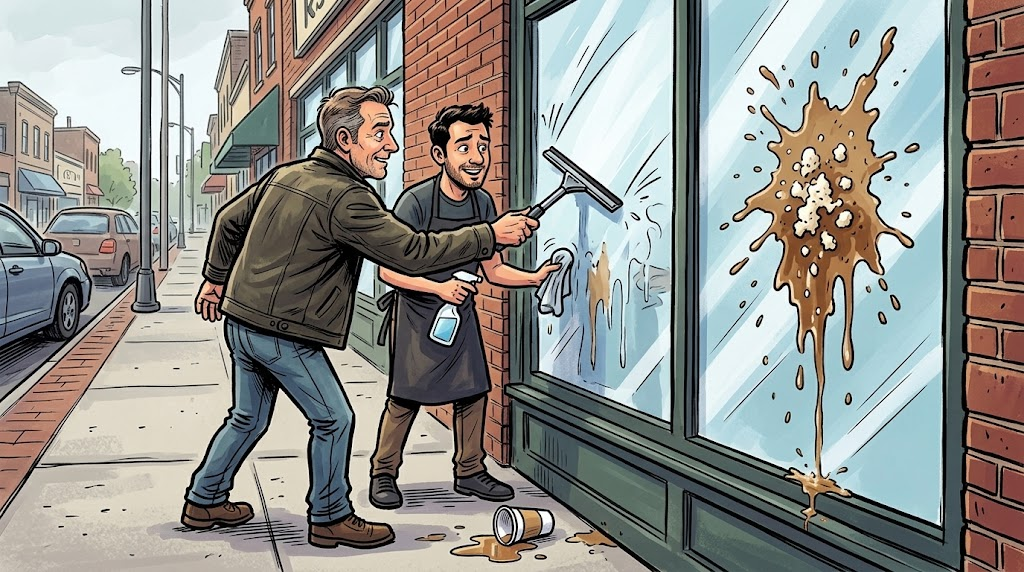
While stores are always going to have problems, save the complaints for when they are valid, being served a coffee with soured milk for example, I have gotten a few of them in my life and its gross. But when it comes to small problems being proportional to the issue goes far. While I was not civilized when I got my 5th soured Milk coffee over 2 months from a business and they said it was not their problem I ended to being a bit uncivilized. I ended up throwing the coffee opened on the outside window of the establishment not to break the window but as a show of if you are going to be a jerk I can be a jerk. the payload of my coffee was a brownish window with white chunky bits all over the window after it being claimed it was my issue that the coffee was bad. This was before the time of Major on line review sites, But boy did it gain the managers attention when it was realized what I was served and it was slowly slipping down the window. The manager wholeheartedly apologized and I did as well… in the end the manager gave me a gift card and I helped clean down his window.
When the retail space is mobbed with adults screaming over fractional things, real health hazards like spoiled milk get brushed off as ‘not our problem.’ A functional store helps a customer actually has curdled chunks in their cup, both sides can fix it, clean the glass, and move on.
CBS news – Massachusetts ice cream shop goes viral for profane Facebook post defending teen employees
META’s race to the bottom continues with overspending.
Meta said Monday it is planning to raise a total of $95 billion to support its investments in artificial intelligence infrastructure and superintelligence. The stock was down 1.6% in morning trading after the announcement. Nvidia, Advanced Micro Devices and Broadcom were interested in purchasing up to $5 billion in shares, Meta said in a statement. The tech giant will initially raise $35 billion in underwritten public equity offerings, before raising an additional $60 billion with an at-the-market program.
In the race to the bottom for nothing Meta is having a hold my beer moment and trying to sell its shirt for more precious AI.
The news comes as hyperscalers pour record sums into the AI infrastructure build-out. Goldman Sachs estimates that AI-related capital spending could total about $7.6 trillion from 2026 through 2031, across compute, data centers and power. Meta’s planned investments will support “emerging AI opportunities” including its family of apps, its AI agent Muse and its data center business, the company said Monday.
The spending for AI is getting so far over the top that when this crashes it will not be pretty. Because at this point everyone is trying to outbuild each other. Even though that AI makers are saying slow down its a game of poker where every LLM is trying to outbluff everyone else and no one really has the upper hand but Nvidia and Micron.
Meta is among the major hyperscalers that are increasingly tapping debt to fund the expensive infrastructure required for the AI boom. Last week, Meta posted third-quarter results showing revenue jumped 26% year on year: $64.60 billion versus the $63.37 billion analysts expected. However, investors focused more on the tech company’s negative free cash flow and its higher full-year capital expenditure forecast.
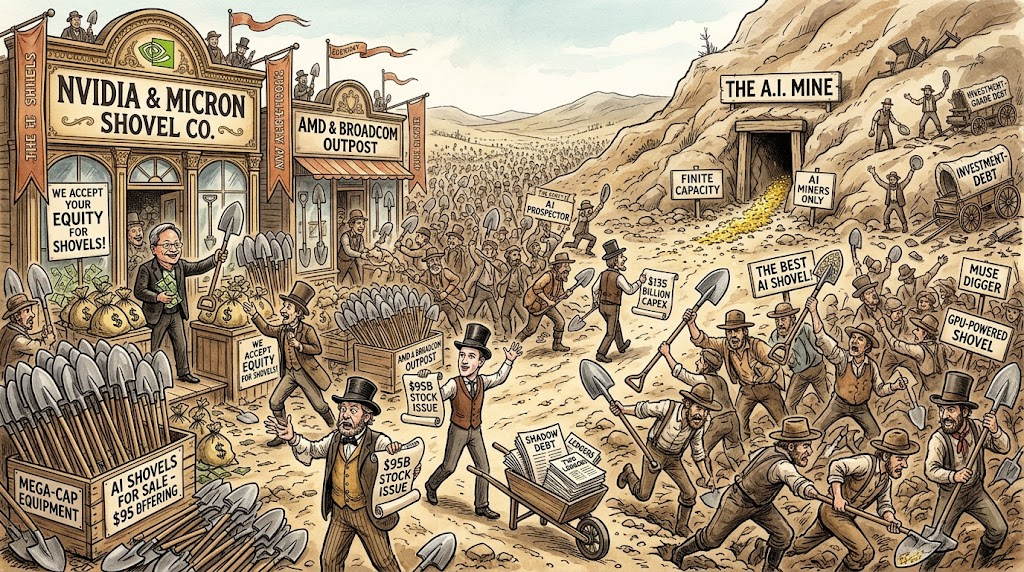
The thing is here more companies are carrying two ledgers and are moving debts to the hidden books. Companies are leveraging anything that is not locked down and they think that the AI gold rush is coming and selling a better shovel will access the AI gold faster.
In my belief I think there is a collapse coming, Whether it be like the 2008 Mortgage crisis or worse. Given that spending is massively out of control and the markets while they are going up it’s only a increase of what you see. There are massive failures building up in the shadows and many of the corporations while showing profits they are showing profits by shifting prices and cooking the books. While mortgage companies and banks are regulated the corporations are much less regulated and are right now doing everything they can to show a “profit”.
It now expects its full-year capex to range from $135 billion to $145 billion, raising the bottom of the range from $130 billion. That sent Meta’s shares lower on Thursday.
Given that they posted a 64.60 Billion profit and spending 135 billion is a MASSIVE mismatch in direction. Facebook has been dropping user engagement and Meta with Quest has been losing engagement as well has put their whole hog into the generative AI thinking it will create magic profits. Eventually this spending is going to catch up with meta and when the check is due who is going to pay for this. Especially with every company outspending any profit being made they can not expect the US to bail them out.
Alphabet, Google’s parent company, said it would look to raise $85 billion in June. SpaceX has closed a $40 billion debt financing to purchase graphics processing units. Anthropic is preparing for an initial public offering. TikTok U.S. is looking to secure multiple gigawatts of computing capacity over the coming years, CNBC reported Friday.
As more people are jumping into the AI gold rush there is a finite capacity and when this all ends there will be one AI mine and millions of shovels looking for profits.
From
CNBC – Meta announces $95 billion stock offering to fund AI expansion
Are the Tailings Ponds About to Burst in the AI Goldrush?

In a sign of the times Anthropic has listed a net loss of 80 BILLION with a b…
Anthropic’s net loss widened sharply to $80.7 billion in the first half of this year, in large part due to a rise in the fair value of bonds convertible into shares of the AI startup, according to a draft prospectus for a planned initial public offering that was reviewed by Reuters.
I have been steadfast in saying AI is a seriously overpriced commodity that has been nothing more than a goldrush. AI is just google search in a trench coat. And that the markets rush to stake a claim in the Gold rush era is much like the 1849 gold rush.
FINANCING COSTS
At an investor meeting on October 14, Anthropic told prospective IPO investors that its third-quarter revenue jumped 45% to $16.8 billion from the previous quarter, Reuters reported, citing people familiar with the matter.
While the figures eased some concerns about the enormous costs of developing AI systems, some investors were disappointed by the slowing sequential growth rate. Revenue had more than doubled from the first quarter to $11.6 billion in the second quarter.
The thing is here is this is only half the numbers, most LLMs have been pushing all CapEx expenditures to a second set of books and it makes these companies look better than they really are. When all of the loans come to be due it is going to be a financial bloodbath because what we are seeing is AI is not ready for the mainstream for constant use. The factor that AI has been a consistent loss leader and companies have no clue how to monetize it in a way that is not going to drive users off they are stuck with negative gains.
A cooler reception for Anthropic’s IPO could weigh on the wider AI market, whose near-term prospects investors see as hinging largely on the share sale’s success, ahead of rival OpenAI’s potential listing next year.
Reuters reported in September that Anthropic posted a net loss of $42 billion in 2025, with most of that stemming from a similar accounting charge. As Anthropic’s valuation climbed, the estimated fair value of those notes tripled year over year.
The thing is, investors they thought they had a slop generating gold shovel paradise and the new car smell of AI is wearing off. While LLMs are trying to say that AI will destroy the world and eat your firstborn and knock up your daughter … The fix still is a power switch in the end.
Attributions from:
reuters – Anthropic logged net loss of over $80 billion in first half of 2026
CoffeeCommander.net – Anthropic says they are profitable as long as you don’t check the inbox for bills.
CoffeeCommander.net – Allbirds Newbird Smartbird AI what’s next flipthebird?
CoffeeCommander.net – Hyperscaler AI Earnings Calls Today .(updated)
McDonalds introduces dynamic pricing while owner is still dynamically gagging over burger.
The idea of dynamic pricing baffles me. The fact that big corps are trying this to extract more money out of consumers should be illegal. Unless dynamic pricing follows the consumer.
McDonald’s is increasingly using artificial intelligence to guide menu prices across the U.S. and some global markets, a plan that aims to boost headquarters’ profit but risks alienating customers and attracting antitrust scrutiny. One pricing factor supercharged by AI: an estimate of how much each store’s patrons are willing to pay.
Consumers at first will not take this lying down, I have seen dynamic pricing and the fact that this is being done by AI makes it a bit funny. the factor is that AI doesn’t understand why people are buying something. So what happens if a group targets a low priced item on a menu for a few months and then pulls the rug on said product, it would create an AI model in a panic. AI is good at dealing with averages… give it an outlier and it does not know what to do.
The details of how that pricing system works, its extensive use of AI, the company’s regulatory concerns and the tensions with its franchisees haven’t been previously reported. For this story, Reuters reviewed screenshots of the company pricing engine taken in August and interviewed nine sources with first-hand knowledge of the burger chain’s strategy. McDonald’s pricing engine uses machine-learning algorithms to continually analyze data from millions of daily transactions across McDonald’s nearly 14,000 restaurants and generate what the company calls “the optimal price” at each location for each menu item, from Big Macs to discounted coffee for seniors.
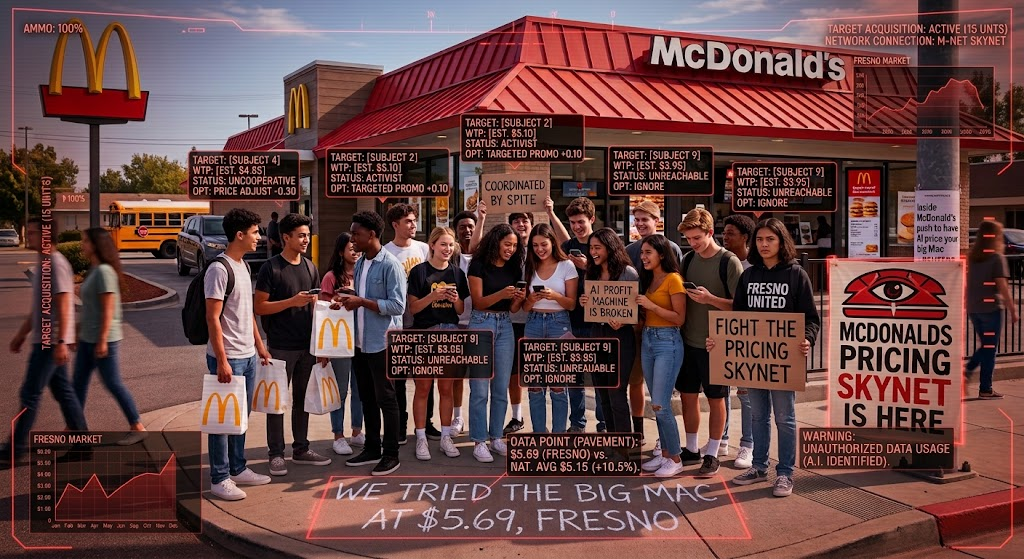
They think they are being clever to drive a few pennies of profit out of customers, the problem here is this is McDonalds which already has earned its way into common language as a McJob. Given that if they spite enough customers, they will revolt and it wont be pretty. One post to a website and a bit of patience people can turn an AI profit machine into gaming the system until it crashes.
A Reuters check of prices in September on the McDonald’s mobile app showed price differences. For example, a company-run store in Fresno, California sells a Big Mac for $5.69, but another company-run restaurant two miles away sells the same sandwich for $6.89, a 21% premium.
The other thing right here is again playing with fire. What’s to stop a person from buying from Store A and returning to store B and pocketing the 21% premium. Some frydrone is not going to wait around while someone is trying to fish up a receipt on a still warm meal.
In January, McDonald’s started requiring franchisees to be “constructively engaging with McDonald’s approved Pricing Consultant and Tools” as part of its new business standards, according to an internal communication sent to franchisees and reviewed by Reuters.
As I stated in beginning AI is good to be an average at things, but once you start adding outliers to the model like a stores finance model shows and uptick in cheeseburgers to the point of near absurd and other stores show a drop because people are spiking the model the AI is going to say to increase the price and once that happens suddenly cheeseburger purchases not only drop from the price increase but people manipulating the prices stop screwing with the AI McDonalds corporate is going to panic because the AI modeling of the price is showing to be failing. In all honesty to guide a model like this it would not take very many extra purchases in a day to corrupt sales data 100 cheeseburgers would be enough to throw a model off. Once people start poisoning the sale model it has some pretty bad outcomes.
First the store sees the sales spike, The AI and Store manager see it and start carrying more of that product. The problem here is product in a store like this is perishable. if the rug is pulled a month later you have a store manager stuck with product rotting losing money, You have pissed off consumers stopping going to that store which creates more wasted product and the manager is stuck with his hat in his hands because the machine told him to buy something that no one could see.
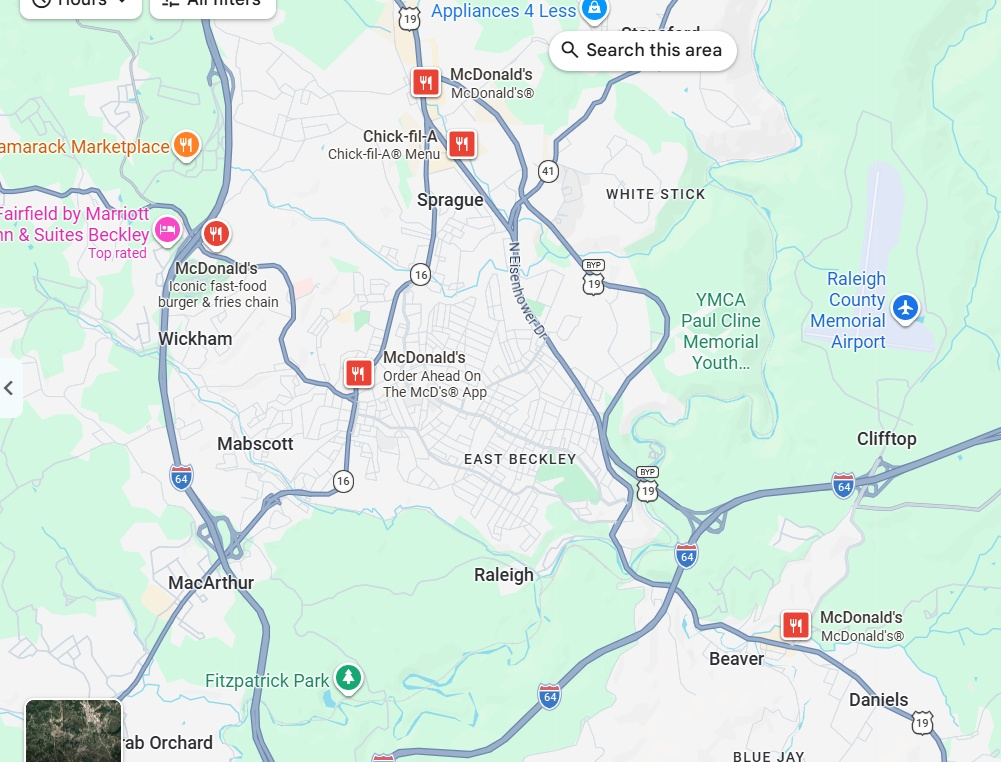
If McDonalds was an isolated store in a tube this would not happen but go to google maps and go to any city and type McDonalds , you will have 3 to 5 in 2 minutes driving distance of each other. McDonalds wants profits and they are instead are going to get a model collapse because in the US you basically have 5 minutes in any direction to a McDonalds and consumers that are easy to spite.
Here is a map where I picked a random area just because it’s random and it shows the exact issue I said.
Examples of McDonald’s parameters for the price engine included, according to the two employees: focusing increases on menu items that have not had a price increase in at least two years; only increasing prices on items that have had recent price increases in at least 30% of stores; excluding ice creams and drinks from price increases during summer months.
Lastly McDonalds mapped out the whole game here. Not only are they exposing the weakness here they are making this exploitable to the point where a group of 20 people could cause profit rot on multiple store in an area and McDonalds reliance on the AI Magic Machine will cause damage to no end of the franchisee. Also as I have said before model rot can come unintentionally if a school bus from a class trip comes in for a week it will cause massive model issues. They will buy too much and too little stock in order to balance out an AI that sees a jump in sales because of a class trip.
Update! The Legal McHammer Drops:
Well now.. It’s as if On October 2, 2026, a nationwide class action lawsuit dropped and the company is alleged to have violated Section 1 of the Sherman Antitrust Act. The lawsuit claims McDonald’s took non-public transaction data to run an algorithmic price-fixing ring across independent franchisees. McDonald’s tried to say “AI does not set the price of a Big Mac.” Sound familiar? Sounds like when the CEO said he “loved” their product.. When you try to force independent franchisees to feed an AI engine so it can coordinate price hikes down to the penny, it isn’t smart retail. it’s an automated crime posing as AI.

McDonalds has ensured that the McJob stays exactly what it is, they are letting a machine that does not have the instinct to run the numbers and see why sales are what they are. A worker who sees two buses pull up will throw extra fries on and know exactly why he did that. AI can’t see the bus pull up and causes the price to jack up a week later because a School play was in a theater for 2 weeks. The worker knows that there was a play by intuition, The AI only sees higher than normal purchase rate. This is why for the same reason 20 people with a few dollars and being bored can cause a store to lose thousands. Again corporate greed and their belief that AI is magic is going to be the downfall.
Welcome to McFelonies would you like Fries with that?
Attributions from:
Yahoo! Finance: Inside McDonald’s push to have AI price your Big Mac
Reuters.com: McDonald’s hit with class action alleging AI-powered menu price-fixing
OpenAI report reveals skills AI cant do also-bi-cant-decide-on-a-title
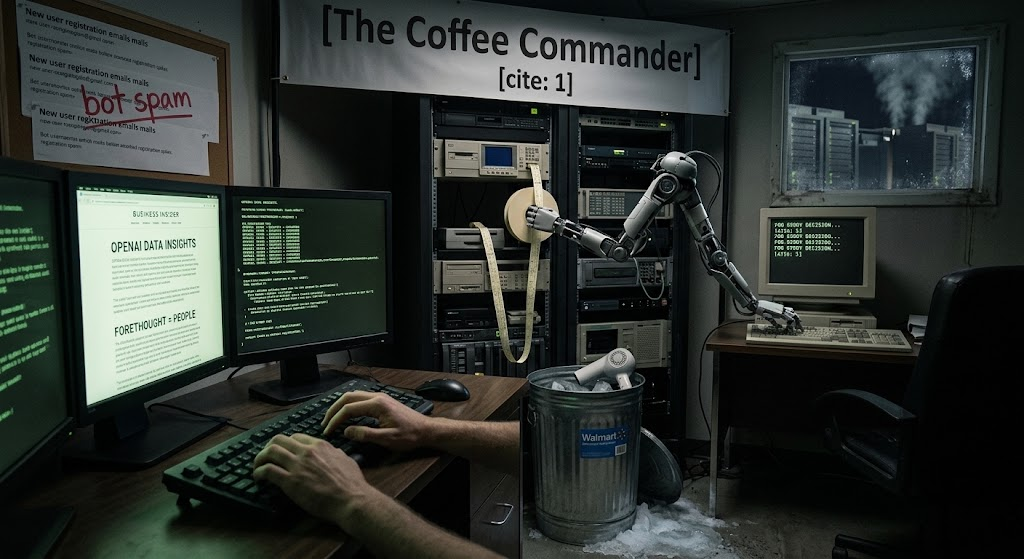
Ed Note: This image was generated with AI and it’s a fever dream.
Business insider wrote about OpenAI. if you look up at the link at the top you could tell they had a more critical title ” openai reveals workplace skills ai cant automate easily 2026 9″ Is what you could pull from the link it self, Business insider could not decide on the title of their own article.
OpenAI recently published one of the clearest signals yet about which workplace skills may become most valuable in the AI era. In a report on how its researchers use AI, the company shared data showing which tasks are being absorbed by AI and which still rely on people.
This report is going to bite OpenAI in the end, for a few reasons the thing is yes OpenAI can do the task but the task will be done exactly the same as any other company that does it so any qualities that stand out from one business to the next will not be there. Eventually when all retailers start seeing sales drop they will hire back the humans for the one thing AI does not have, Guts and intuition.
The biggest automation gains this year came in coding, technical support, monitoring computer runs, and analyzing results. By contrast, AI is still doing relatively little work deciding what projects to pursue, where to invest resources, or how to set priorities.
Sure AI works for Vibe Coding but the problem with vibe coding is if the AI absorbs an exploit, you will see 10 companies hacked by the same exploit in the same day versus the one company that gets hacked with poor coding practices. Also as LLMs take up more information people will work harder to poison the LLM to push bad code to devs.
Companies can measure whether code was written, products shipped, or bugs fixed, making those tasks easier to automate. Deciding what should be built in the first place is harder. It requires judgment, context, tradeoffs, and a willingness to take risks.
As OpenAI put it: “People still set our research priorities, judge which ideas and results to pursue, and decide whether to scale, pause, or deploy systems.” In other words, the future of human work may shift away from execution and toward making the right decisions.
For every decisions that is made here there is an equal and opposite decision to work against the same exact thing which reinforces my above opinions. OpenAI, Sam Altman and the rest thing AI is the farts and butterflies of the universe and that it will be the best thing since sliced bread. But Sam Altman forgets to say that AI is using hideous amounts of electricity, Driving memory prices up, Driving electronics market wide up by margins not seen since the early 2000s. So when a data Center is dumped in backyards with noise pollution, water pollution and generally driving up power prices while a town has a private contract that citizens have to take up the slack.
Attributions from:
Business Insider – OpenAI reveals the AI-era workplace skills that matter most
You might be eligible for a refund from your dealer… CVS
If there is one thing we learn as we age is most people step away from the illegal dealer and end up with the legal dealer of drugs… CVS. But the funnier thing is for the people whom have had a “Dealer” they are likely more secure than CVS.
Many CVS customers may be eligible for money as part of a settlement in a class action lawsuit against the company.
The settlement stems from a lawsuit that alleged CVS violated laws by sharing user data from its website and application with advertising company Criteo.
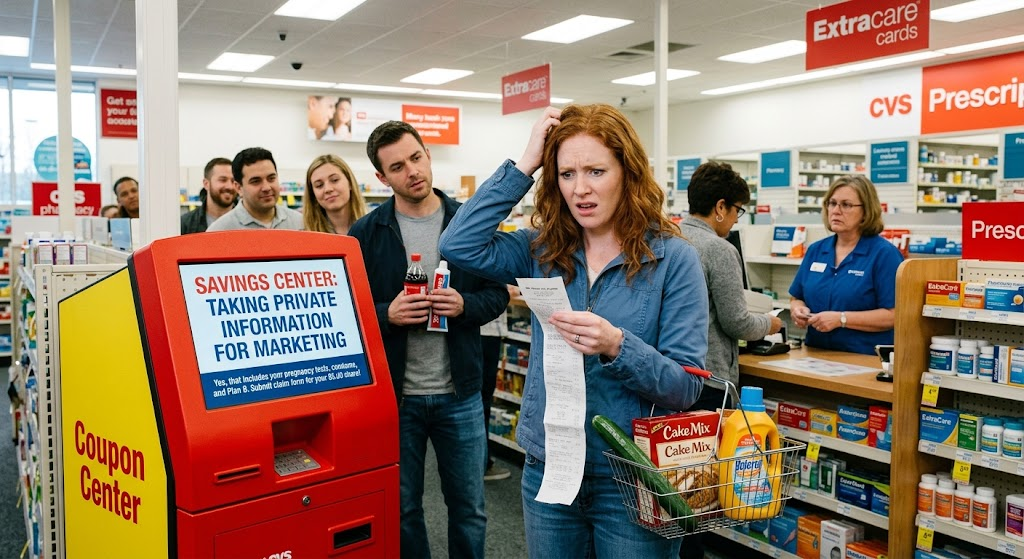
The thing is as much as someone purports that it is alleged. My opinion is they are a bank vault with a screen door. The CVS registers tell you to put in your full name and birthdate. I made an objection to the CVS manager and they claimed “oh it has a privacy screen!” I said no it has a polarized filter pretending to be security, anyone that is lingering 10 feet behind you see you typing all of your information in as long as they stay in 20 to 30 degrees of the CVS kiosk.
CVS and Criteo denied any wrongdoing. In a statement, Amy Thibault, a CVS spokesperson, said: “We stand by our privacy practices and believe they comply with applicable laws. The settlement resolves claims based on legal theories that challenge common online industry practices.”
CVS and Criteo denied any wrongdoing. YET they changed their entire terms of service, Took more rights away from the consumer and now hold a INSANE right to hold your personal information in perpetuity
The statement also said CVS agreed to the settlement to “avoid expense and distraction of prolonged litigation.” While the settlement is still awaiting final court approval, affected customers can submit their claims through Nov. 16.
This statement is so contradictory its not even funny, Corporations love prolonged litigation. There is no way in hell they would want to “settle” if they can hang up in court for 10 years and keep that going its less than what is at hand. They threw out a number and said go away we are likely doomed if this goes to court.
I asked myself who the hell is Criteo, it would seem its a back end to CVS and it likely resides on those machines well that say “check your coupons here” , at a guess CVS was wholesale giving the purchases to them so every time you walked into CVS to get your drugs and purchased something Criteo got a copy. The problem here is recently CVS changed their terms of service to give Criteo a hole into your meds and other PII. If you buy plan B they know, if you buy condoms they know. If you buy those and a week later you buy monostat it will try to put that together that you are unclean or you had an issue during intercourse. If you buy pads every 24 days it becomes your unofficial period tracker. So that day you walk in on day 23 and go to the savings center the machine happily prints a Tampax coupon.
Yet, Criteo takes this information, sell its on a second market, and CVS claims they protect your information! Just from my last paragraph alone think about how much information they can take from you. Your period time, Plan B (you make mistakes), Condoms (sexually active), Monostat (Maybe doesn’t take care of themself if repeated purchase.) . Even for the males the same purchases will let the company figure out that a male purchasing the same items and come up with through metrics Male buys these items and the timings and will happily add “Male buying for female” and use all the same metrics.
For machines like this a little malicious compliance to the retail machine never hurts, Buy three things that never should go together in a purchase and put it on your card.. Say Cucumbers, Condoms, and Petroleum jelly.. Let the prediction machine do the rest. After awhile of crossing 3 item purchases together you will offset the machine so badly it will not how to accurately measure you. Vinegar, Tampons and Baking powder. the list goes on. Plan B, a turkey baster, and Cake mix and a fleet enema. Even if you are not needing these things such as the plan B or Tampons.. donate them to a shelter they always need the things..
The $10 dollars that CVS is offering is a bad joke, they want you to go away for the price of a medium tier Starbucks coffee..
Attributions from:
USA TODAY – CVS customers may be eligible for money from settlement
US GOV POTUS TO CHANGE AI TO SI? WTF! ITS FUBAR!?
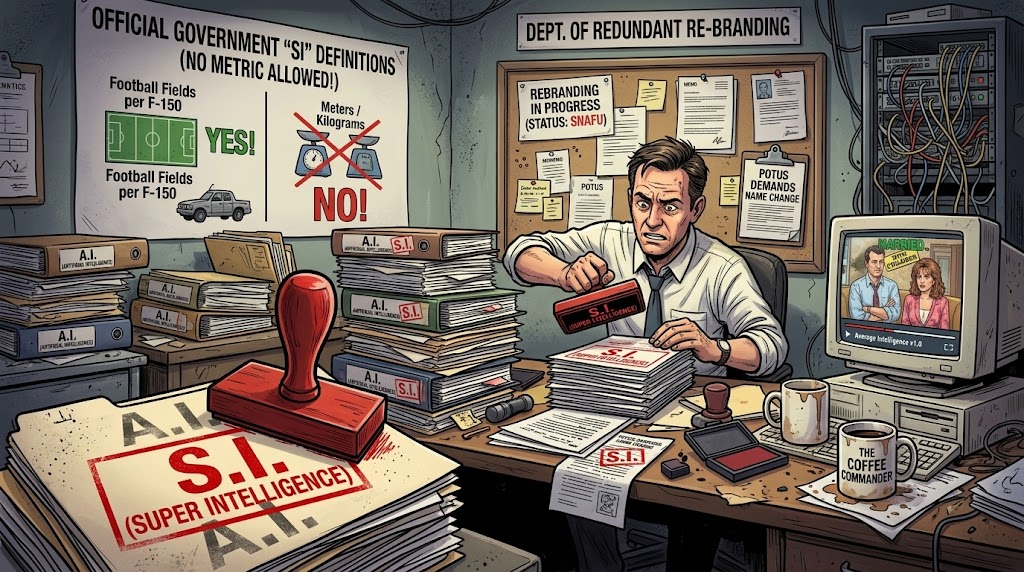
Ok, Now in English, the President of the United States wants to change AI (artificial intelligence) to SI (Système International d’Unités… wait, shit, “Super Intelligence”). Oh please, AI is not super, Its average as a matter of fact it is the most average thing you have ever met.
The problem with this is he is trying to apply a title to AI it does not deserve. Albert Einstein and Fermi could be called supermen because they did super things. AI can not theorize past what it knows both of those men theorized greater things and eventually achieved them. AI has achieved watching every episode of married with children.
US President Donald Trump says the term artificial intelligence (AI) makes the technology “sound fake” and wants it to be called “super intelligence”.
To anyone born in the last 120+ years knows that an artificial robot is the most powerful thing in the universe. The fact that the POTUS thinks Super sounds better is completely wrong, How many things have we added the word super to that has been a massive failure.
“From this point forward, all of United States’ documents, and hopefully the world’s, will be changed to use the more accurate term ‘super’ as opposed to ‘artificial’. So it’s ‘super intelligence’,” Trump said. In the past week, Trump asked his social media followers to vote on other potential new names for AI including superior intelligence, extreme intelligence and supreme intelligence.
Lets go through this
1: Super intelligence – No doesn’t fit, the factor is if you think about it even in the US patent office SI will not work because it clashes with so many things. Metric for example. Also “super” which is a common word , and “Intelligence” another common word. There is nothing super about AI as a matter of fact its Average at everything not super at everything.
2: superior intelligence – Read above.
3: supreme intelligence – fucking stop already Read above
4: extreme intelligence – We had this already this on X, I think it called it self MechaHitler.
While Trump’s ambassador to the UN Michael Waltz later said: “If you didn’t see the president’s speech, it’s now super intelligence. I think he’s absolutely right.” However, when asked for his thoughts on the new name, Canada’s minister of AI Evan Solomon said: “Canadians are not enthusiastic, at all, about renaming things,” in an apparent reference to Trump renaming Lake Ontario.
The fact that the Executive branch is trying to force this one is worse than anything because it shows the bifurcation of the people vs the lords, This move is divisive and people that run things know this. but as far as AI is concerned we are at no level of super.
The biggest concern here is the POTUS renaming a device that the current GOV has an interest in (10%) is seriously concerning. Collusion is a hell of a thing. The second some dumbass at Nvidia, Anthropic, or any vendor tied to federal contracts or CHIPS Act money renames their product to ‘SI’ to appease the executive branch, they’re walking into shareholder derivative lawsuits and SEC fraud filings. You can’t rebrand narrow autocomplete as ‘Superintelligence’ on an SEC filing without committing fraud.
Call me when the positronic man happens, When Andrew Martin happens and Asimov rolls in his grave I will accept SI, but the more correct name of AI stands with me..
But this distraction optics should not be listened to and this is why this post is short. Coffee time!
ed note- Mr Data never called himself Super.
Attributions from:
BBC – Trump wants AI to be rebranded as super intelligence. Will it work?
Attack of the Christmas 2026 edition.

Every year Christmas for retail comes earlier and earlier.
ed note- Christmas the holiday will be properly capitalized while retail christmas will not.
We are not even through the first month of school for kids and now store are decorating for christmas. The thing is when I was young seeing christmas decorations before thanksgiving was borderline blasphemy. Always the day after Thanksgiving would be the first time stores would decorated for the holiday
Now Stores push christmas in july, christmas in September , christmas because we say so.. and so on. Retailers need to stop this. Retailers think buy stuffing this holiday in our face we are going to buy more… the reality is we buy less. What corporations miss is the time that makes or breaks for a quarter for the holidays gets so diluted that the black friday sales and cyber monday sales just get looked over as another day of retail manipulating customers.
For the most part those two days are a joke because if you eye something you want for Christmas, Go to that store starting in October and take a photo of the price of the item you want you will see a very interesting trend. About October 7th that price will start going up. By November that price will be about 15 to 20% higher than the price throughout the year, BUT!, you will see “BLACK FRIDAY DEAL 18% Off new low Price! “. So that cool thing you have been eyeballing most of the year goes from $100 to $120 down to $102 in price with a grand savings of negative $2 dollars.
Stores need to get their heads out of there asses, they are making Grinches of everyone. Because its about this time now we start getting yelled at DO YOUR CHRISTMAS SHOPPING!, uhh fuck no, I have bills to pay. year after year for the last 15 years the christmas shopping black Friday and cyber Monday days are so diluted that they don’t understand it.
I have a recommendation to all retail stores out there. Let people have their holidays, Let people have Columbus day, Give the kids Halloween without the parents worrying if they have enough for Christmas, let them have Veterans day, and lastly lets have Thanksgiving without worrying until 11:59:59pm of not having to deal with christmas shopping.
Give people a break, Allow them to swing into Christmas rather than smashing them in the face with unending christmas sales… Let people start to decorate without the guillotine of christmas sales being thrown into them every place they go. What retail doesn’t want to acknowledge is happy people will spend more money rather than depressed stressed out people. Depressed stressed people will buy 20 shitty little things just to get christmas shopping out of the way vs the happy person putting in thoughts to what people want and buying 20 well thought gifts out for Christmas.
The last few years I asked my SO if we could make the week after Christmas the time to shop for christmas because 9 times out of 10 you get deals that are pre-October prices and summer slump deals.
Signs of the AI times.
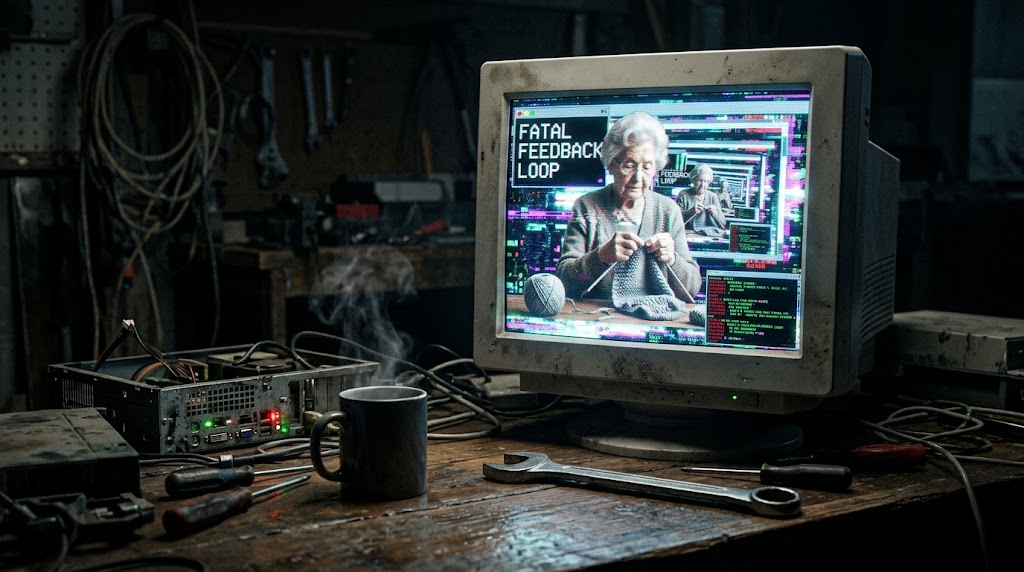
Lately I’ve been seeing a lot more commercials for ChatGPT and Other AI’s. usually when it is on a thing that has been out for awhile it normally is the first sign of a dying fad. Now AI had some advantages but people do not use AI other than a slop creator or a homework cheat machine. Watching disney+ the commercial for ChatGPT has come up during every break and its some old lady knitting with a woman having a conversational prompt with it. An elderly woman sitting with her yarn, talk with a her phone about sizing up her knitting needles. The interaction drags on, masquerading as genuine human companionship, until that sterile, uncanny synthetic cadence cuts in to announce, “It’s ChatGPT”. This could have very bad implications because suddenly people get the idea to replace human contact and slap some LLM in front of grandma and suddenly 4 months later you find her dead because the LLM suggested she microwave her needles for better loops.
The fact that they targeted the older generation with this is kind of gross, AI is not a replacement for human contact. The longer the advertisement goes, the worse it gets the elderly woman asks what are you and the voice changes to a more robotic voice and says it ChatGPT.
But seeing the advert come up so much is a sign of the times, with AI makers saying they want to slow down and the factor that they are advertising. In my opinion I think AI has peaked, Its peaked with all of the slop and the homework cheats and AI’s true use is fallen to the wayside. My reason for that is AI is at a level right now where it is functional yet makers are looking for more data, and unlike Jonny 5 they can only absorb a finite amount of data. The other part is with all the slop out there the AI is eating itself, and having hallucinations from its own crap.
Models are getting so corrupted due to the fact that companies like google have put synthID out there to keep themselves from being being a victim of autocannibalism. There is no synthID for text files and right now LLM’s have no clue what they are digesting because massive corporations are making the mistake of having AI bots to make their sites to look busier than they really are.
The worst part is we have seen this model play out in real life in the UK with Bovine spongiform encephalopathy. You say but wait, that’s a cow! Why yes it is and when you feed cows cows. When you use leftover cow bits to feed cows you create a feedback loop that gets worse with every time you do it and i feel like we are here with AI .
The recent announcement of AGI was more of a distraction optics move by makers to get away from the problems that are coming up. The warnings are out there.
AI makers grouping together and saying “we need to slow down”. What would happen if all auto manufactures got together and said we should not do X thing, there would be a lawsuit in 5 seconds. ,
Second AI makers looking for a carte blanche release from liability if the AI tell them to do something wrong. When hairdryers have warnings not to sleep with them or eyeglass screwdrivers have warnings not to stick them in .. well..
Third Capex spending that is tied to the US GOV when Rates are going up. CAPEX spending so far exceeds the profit ranges that Anthropic says “we are profitable” but “don’t look at the books”. Right now these companies are running with the “too big to fail” and we know where that goes. The governments investment into AI companies has no payoff because computer tech devalues twenty times faster than pulling a brand new car off a lot. The return on value of 1 year old hardware is at times not even 1/10th of the purchase price.
Fourth The fact that AI keeps doing things it should not. AI time after time now has been failing in big ways, The more that researchers keep pressing AI to do things AI ends up screwing up something it should not of touched.
Last is the advertisements, If the market was self driven it would not need a single advert because word of mouth gets 10 times the attract rate than a commercial has and for the most part 99% of the internet is word of mouth it follows outside of the way television had advertised to us in the past.
Given all of this, is a signs of the times. Do I believe AI should slow down. Yes in the public face, No in the research end. AI needs to fix its security and its own consumption of itself.