White Paper 12: Technical Audit of the Proposed Smithfield Data Center – Grid Constraints, Aquifer Draw, and the Myth of Ecological Neutrality
The proposed Smithfield data center is fundamentally misaligned with its physical site parameters. Siting a high-density, multi-megawatt compute facility atop an active hydrologic divide introduces acute thermal, electrical, and environmental liabilities. Discharging massive thermal energy into a watershed already subject to active cyanobacteria advisories risks benthic dissolved oxygen collapse, accelerates nutrient loading, and directly threatens surface and groundwater resources managed by the Rhode Island Department of Environmental Management (RIDEM)
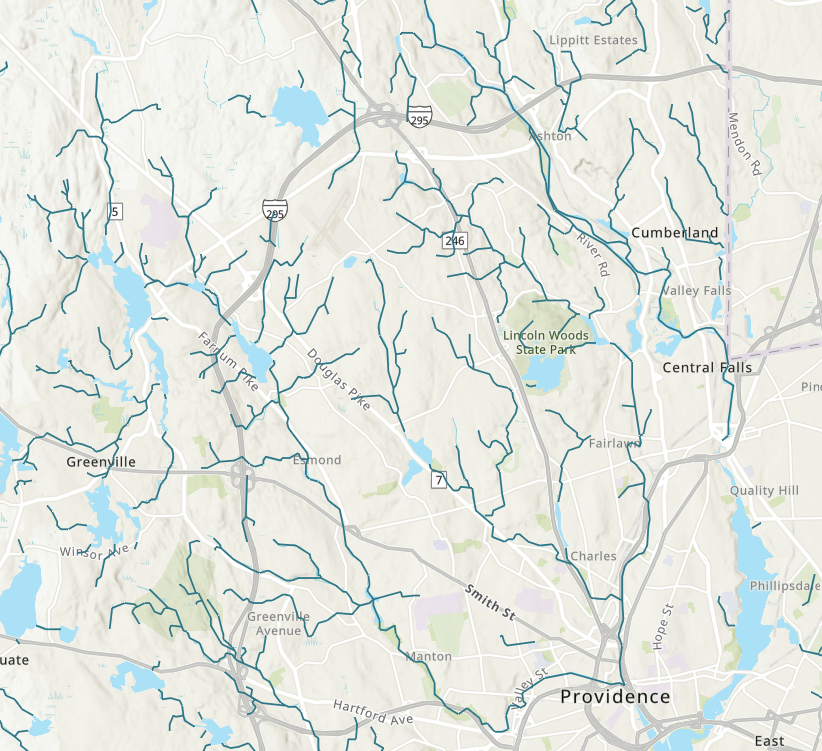
Draft Section: Hydrologic Vulnerability and Thermal Pollution Dynamics
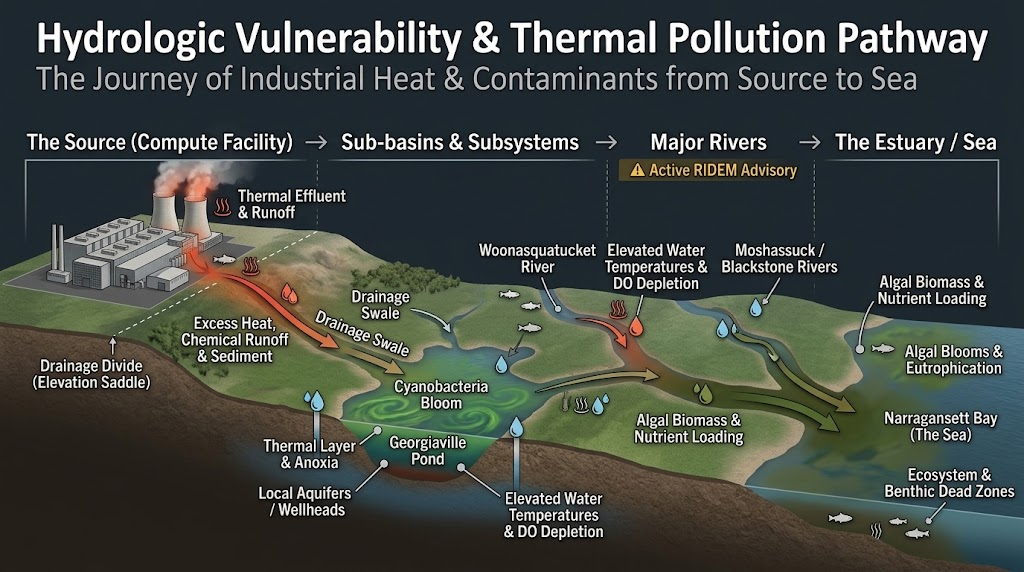
1. Site Hydrology & Drainage Bifurcation
The proposed facility sits directly on a critical drainage divide between two major sub-basins: the Woonasquatucket River corridor to the west and the Moshassuck River / Blackstone watershed to the east. Surface runoff and shallow groundwater discharge from this elevation directly feed municipal wellhead recharge areas and downstream public recreation water bodies managed by the Rhode Island Department of Environmental Management (RIDEM).
Placing a high-density industrial compute facility across this hydrologic saddle introduces severe risks to regional drinking water aquifers and recreation assets, including Georgiaville Pond, Stillwater Reservoir, and Olney Pond at Lincoln Woods.
2. Thermal Effluent and Accelerated Cyanobacteria Proliferation
Recent monitoring confirms that receiving waters in this sub-basin are already ecologically fragile, operating under active RIDEM Cyanobacteria Advisories. Introducing an active cooling cycle or thermal discharge fundamentally alters the thermodynamic equilibrium of these shallow water bodies:
- Elevated Baseline Temperatures: Cyanobacteria (blue-green algae) replication rates spike when ambient water temperatures exceed 20°C to 25°C. The rejection of millions of BTUs of waste heat into local drainage swales eliminates natural cool-water buffering capacity, accelerating cellular division and extending bloom persistence.
- Thermal Stratification: Discharged heat creates a low-density thermal layer at the surface, preventing natural vertical mixing and atmospheric re-aeration. This thermal cap accelerates deep-water anoxia, releasing legacy phosphorus from bottom sediments directly into the water column.
3. Dissolved Oxygen Depletion & Benthic Dead Zones
The convergence of thermal loading and algal biomass leads directly to catastrophic dissolved oxygen (DO) collapse:
- Physical Oxygen Saturation Loss: The solubility of dissolved oxygen in freshwater decreases inversely with water temperature. Warmer water holds less dissolved gas at the physical intake boundary.
- Biochemical Oxygen Demand (BOD) Spikes: As temperature-accelerated cyanobacteria blooms reach senescence and die off, heterotrophic bacterial decomposition consumes available benthic oxygen, driving dissolved oxygen concentrations below the 5.0 mg/L threshold required to sustain native aquatic life.
- Regulatory Impairment: Siting an artificial heat source within an already nutrient-sensitive drainage corridor directly conflicts with Rhode Island Water Quality Regulations regarding thermal mixing zones and anti-degradation standards for Class A and Class B waters.
Section 3: Regional Grid Fragility, Ratepayer Cost-Shifting, and Emergency Municipal Liabilities
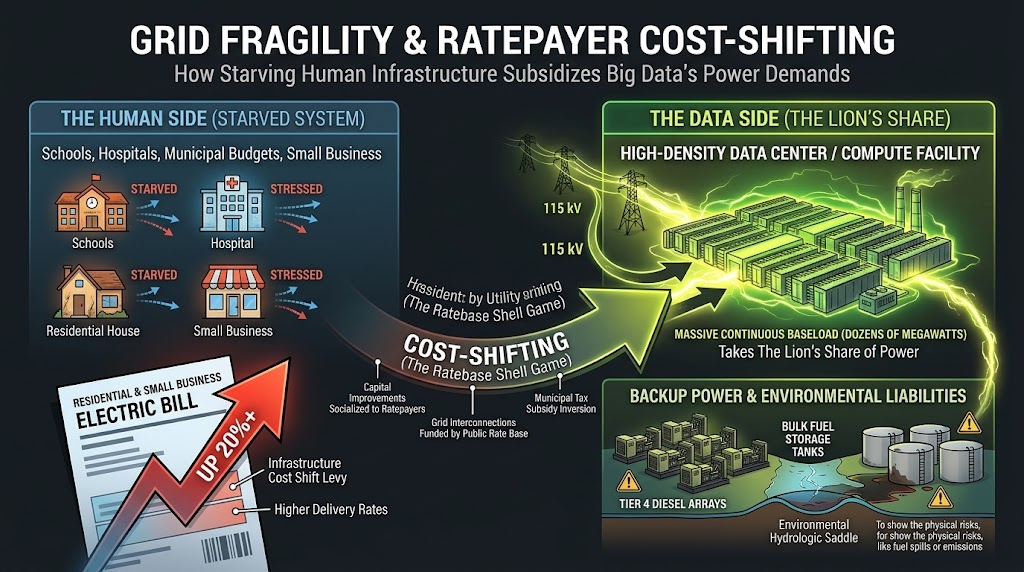
1. Grid Capacity Mismatch & Distribution Vulnerability
Hooking a multi-megawatt industrial compute facility into Northern Rhode Island’s electrical infrastructure is fundamentally mismatched to regional capacity constraints. While the local grid is not historically prone to rolling blackouts, regional sub-transmission corridors operate under tight distribution tolerances. Siting a massive, continuous non-coincidental base load onto local feeds introduces severe local power-quality concerns:
- Voltage Fluctuation & Harmonic Distortion: High-density compute racks cycling variable workloads induce rapid transient load steps. Even minor line voltage drifts (+-4v) create upstream harmonic distortion, stressing regional distribution transformers and degrading power quality for surrounding commercial and residential circuits.
- Transmission Bottlenecks & Tariff Volatility: Since the operational acquisition of utility assets by Rhode Island Energy, energy supply rates have experienced sharp seasonal volatility (often swinging up to 20% annually). Rhode Island sits at the vulnerable tail end of ISO New England’s natural gas and transmission import corridors; injecting high-density industrial demand into a supply-constrained market directly intensifies wholesale clearing prices.
2. The Ratepayer Infrastructure Shell Game
A facility demanding dozens of megawatts cannot plug into existing substation equipment without extensive capital improvements:
- Interconnection Capitalization: Rhode Island Energy will not absorb the cost of dedicated 115 kV line taps, sub-station rebuilds, or high-capacity step-down switchgear.
- Cost Socialization via the Rate Base: Under standard utility regulatory frameworks, system reliability upgrades and transmission interconnection expenses are routinely capitalized into the broader distribution rate base. Industrial developers negotiate bulk economic development rates, leaving residential and small commercial ratepayers to shoulder the multi-decade debt service on utility infrastructure they do not use.
- Municipal Tax Subsidy Inversion: Siting incentives, payment-in-lieu-of-taxes (PILOT) agreements, or tangible personal property tax concessions deplete the promised municipal windfall. As computing silicon depreciates to near-zero book value within 36 to 48 months, the resulting municipal budget shortfall shifts directly back onto local residential property tax rolls.
3. Environmental Liabilities of Backup Generation in a Fragile Hydrologic Saddle
To guarantee “four nines” (99.99%) or “five nines” (99.999%) operational availability, the facility must deploy massive on-site generation:
- Bulk Fuel Farms Over Shallow Groundwater: Siting tens of thousands of gallons of ultra-low sulfur diesel (ULSD) across dozens of Tier 4 generator belly tanks directly over an environmentally sensitive hydrologic saddle is a critical regulatory risk.
- Severe Weather & Hydraulic Containment Risks: Given Rhode Island’s increasing frequency of localized severe convective storms and intense precipitation events, typical secondary containment berms risk hydraulic overload. Any unmitigated breach or transfer spill during fuel delivery threatens immediate petroleum hydrocarbon migration into the shallow water table, directly imperiling municipal wellhead recharge areas and downstream recreation basins.
- Heavy Metals and Airshed Contamination: Periodic load-bank testing and routine exercise runs of multi-megawatt diesel arrays dump nitrogen oxides (NO2), fine particulate matter (PM2.5), and heavy metal traces into the immediate airshed, where wet atmospheric deposition flushes contaminants directly into perimeter wetlands.
4. Unfunded Municipal Emergency Response & First Responder Burdens
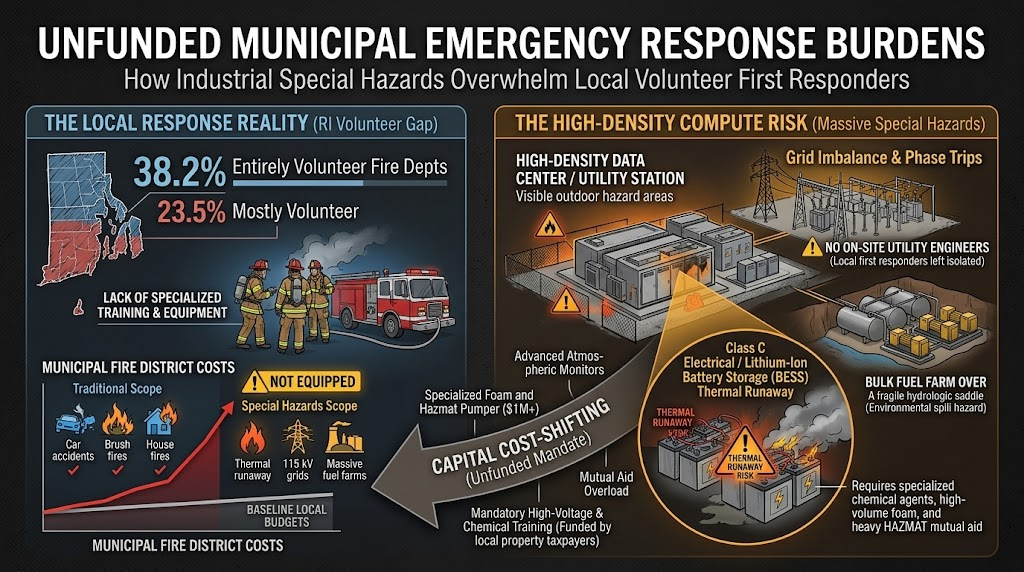
An industrial computing facility introduces high-voltage hazards and specialized chemical fire profiles that exceed the baseline operational scope of municipal fire departments:
Lack of Dedicated On-Site Utility Response: During grid trips, ground faults, or sudden phase imbalances, the burden of emergency isolation falls entirely on local responders until utility field engineers can mobilize off-site. Without permanently staffed, dedicated on-site utility engineers, local emergency services are left managing multi-megawatt electrical and hazardous material events unassisted.
Class C Electrical & Battery Thermal Runaway Realities: Utility-scale uninterruptible power supply (UPS) systems—relying on massive lithium-ion battery energy storage systems (BESS)—carry acute risks of thermal runaway. These events cannot be suppressed with standard municipal water tenders and demand specialized chemical suppression agents, high-volume foam equipment, and specialized hazardous material (HAZMAT) protocols.
Capital Equipment Cost-Shifting to Local Taxpayers: Small municipal fire districts are not equipped or budgeted to acquire specialized electric-vehicle/BESS fire suppression platforms or advanced atmospheric monitoring tools required for high-density electrical fires. The developer’s risk is effectively offloaded onto local property taxpayers to fund specialized mutual-aid equipment and mandatory high-voltage training.
Section 4: Hydro-Thermal Plumes, Legacy Contaminant Mobilization, Acoustic Cavitation, and Extreme Meteorological Vulnerabilities
1. Thermal Injection into Ecologically Stressed Basins
Discharging industrial thermal effluent or redirecting heated stormwater into this hydrological saddle compounds preexisting biological degradation:
- Amplification of Late-Season Cyanobacteria Advisories: Water bodies in the immediate receiving footprint—including Stillwater Reservoir and Georgiaville Pond—already trigger active RIDEM Cyanobacteria Advisories late into the season. Introducing continuous heat rejection removes the baseline thermal floor, turning seasonal blue-green algae blooms into permanent, toxic microcystin-producing monocultures.
- Downstream Thermal Shocks & Chemical Synergy: Artificial heating accelerates dissolved mineral leaching. Biocides, scale inhibitors, and high Total Dissolved Solids (TDS) discharged alongside heated effluent act as chemical catalysts, collapsing downstream dissolved oxygen (DO) levels and suffocating sensitive benthic zones.
2. Sub-Basin Drainage Alteration & USACE Jurisdictional Triggers
Massive site regrading, tree clearing, and the creation of acres of continuous impervious cover require drastic alterations to existing surface hydrology:
- Disruption of Natural Sub-Surface Hydrology: Siting heavy building pads directly across this drainage bifurcation permanently severs natural shallow groundwater recharge pathways that supply local private and municipal wellheads.
- Army Corps of Engineers (USACE) Regulatory Review: Diverting established intermittent headwaters, altering perimeter wetlands, and channelizing natural runoff triggers federal Clean Water Act (CWA) Section 404 permitting and National Environmental Policy Act (NEPA) oversight. USACE hydrological modeling must evaluate how permanent watercourse diversions impact base-flow stability across both the Woonasquatucket and Moshassuck watersheds.
3. Proximity to Legacy Industrial Waste & Superfund Thermal Mobilization
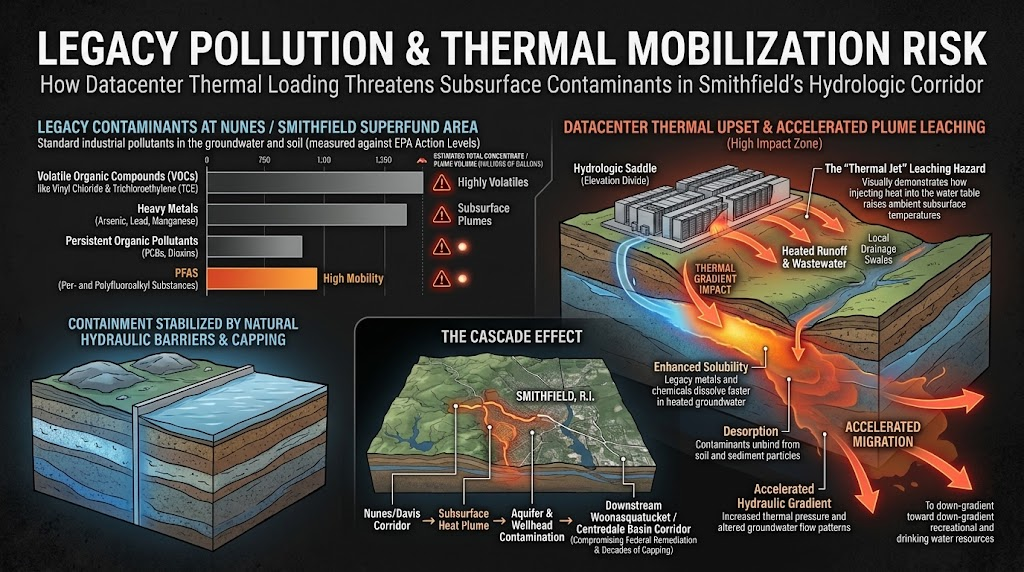
Northern Rhode Island carries a multi-century legacy of heavy textile, toolmaking, and chemical manufacturing contamination:
- The “Thermal Jet” Leaching Hazard: Subsurface plumes do not remain static when subjected to artificial thermal gradients. Injecting heated runoff or altering groundwater flow patterns risks destabilizing subterranean hydraulic barriers, accelerating the migration of legacy heavy metals, polyfluoroalkyl substances (PFAS), and solvent plumes.
- Superfund Corridor Interactions: The downstream Woonasquatucket basin already harbors high-priority remediation corridors (such as the Centredale Manor restoration zones downstream). Any significant thermal acceleration or hydrological rerouting from upstream Smithfield developments threatens to compromise decades of federal capping, sediment containment, and ongoing natural attenuation programs.
4. Low-Frequency Acoustic Cavitation and Wildlife/Human Impact
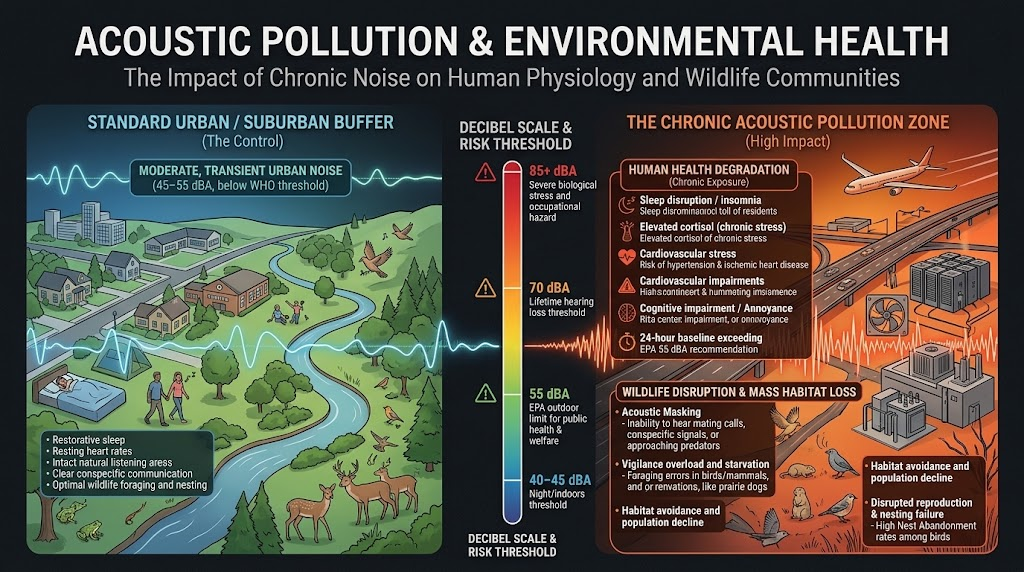
Data center environmental reviews routinely hide the severe acoustic impact of high-density cooling infrastructure:
- Infrasound and Low-Frequency Noise (LFN): Evaporative chiller cooling towers, massive air-handling units (AHUs), and variable-frequency fans produce continuous acoustic signatures below 250 Hz, with significant infrasonic components under 20 Hz.
- Acoustic Cavitation & Structural Resonance: Unlike high-pitch mechanical noise, low-frequency pressure waves bypass standard tree-line buffers, ground berms, and residential building envelopes. Long-term exposure to persistent low-frequency hums induces sleep disturbance, vibroacoustic stress, and chronic autonomic nervous system fatigue in surrounding neighborhoods while disrupting local avian and wildlife navigation.
5. Meteorological Vulnerability: 10-, 50-, and 100-Year Precipitation Surges
Rhode Island’s updated climate precipitation models confirm that historical 10-, 25-, 50-, and 100-year storm frequencies are breaking legacy stormwater design standards:
- Hydraulic Overload of Retention Basins: Standard civil engineering retention basins sized on outdated historical NOAA Atlas 14 rainfall data cannot buffer modern high-intensity convective rainfall.
- Catastrophic Perimeter Flushing: During an extreme storm event, overloaded retention systems will breach, flushing hot retention water, suspended industrial particulates, and petroleum traces from backup generator staging areas directly into adjacent wetlands and municipal aquifers before settling can occur.
6. The “Parasitic Infrastructure” Reality
Hyperscale data facilities increasingly target semi-urban and suburban peripheries for convenient proximity to municipal water lines and high-voltage transmission rights-of-way. In exchange, they deliver virtually zero local economic circulation, negligible permanent employment (often fewer than 20 on-site staff), and massive systemic drain on local resources. The infrastructure operates as an extractive, localized liability rather than a municipal asset.
Section 5: Structural Non-Viability on Terrestrial Acreage, Strategic Offshore Alternatives, and Aviation Interference Risks
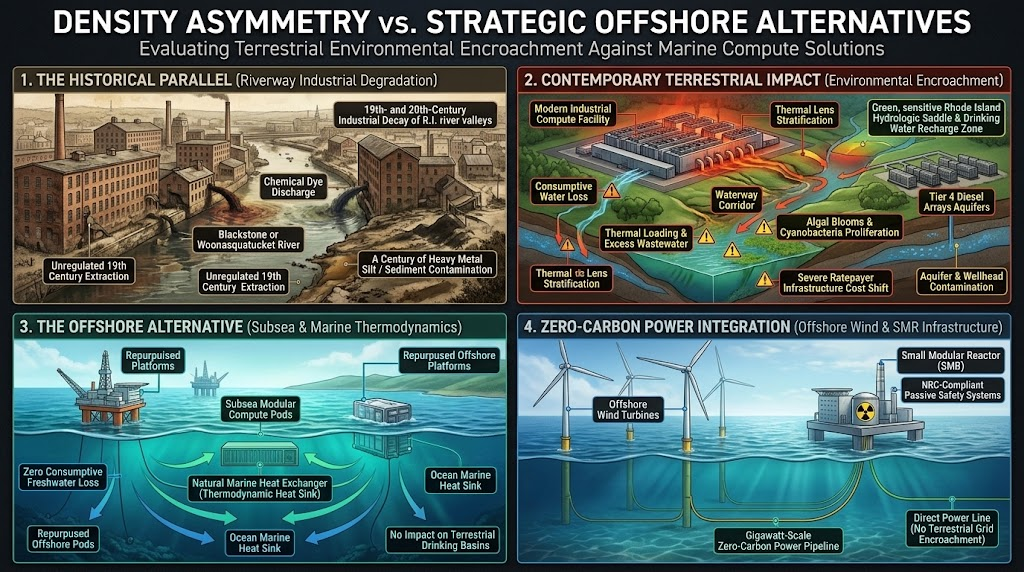
1. Density Asymmetry and Historical Environmental Parallels
In a geographically compact state with high population density radiating in every direction, dedicating terrestrial acreage in sensitive recharge zones to heavy-compute infrastructure represents an unsustainable land-use model:
- Repeating Industrial Extraction Patterns: Granting zoning variances and expedited site permits without comprehensive multi-season baseline studies mirrors the 19th- and 20th-century industrial degradation of the Blackstone and Woonasquatucket river valleys. A century ago, mill complexes turned regional rivers into open chemical discharge ditches; today, unvetted high-density compute risks replacing dye pollution with persistent cyanobacteria blooms, heavy metal runoff, and diesel contamination over critical drinking water aquifers.
2. Viable Alternative Architectures: Offshore Siting and Marine Heat Sinks
Rather than consuming terrestrial municipal watersheds and overloading localized electric substations, utility-scale data architecture should align with regional offshore assets:
- Marine Thermodynamics vs. Aquifer Evaporation: Deploying compute clusters on repurposed offshore infrastructure (such as decommissioned platforms or marine modular pods) leverages the ocean as a virtually infinite heat sink. Subsea and marine heat exchangers eliminate consumptive freshwater loss, avoid local thermal lens stratification in shallow ponds, and completely remove thermal pollution from municipal drinking basins.
- Direct Offshore Wind Integration & Small Modular Reactors (SMRs): Rhode Island already leads in offshore wind development. Coupling high-density loads directly to offshore wind transmission lines or next-generation Small Modular Reactors (SMRs) insulates the terrestrial grid. Modern Gen-IV SMR designs feature passive safety systems that physically prevent loss-of-coolant meltdowns under NRC regulations, generating localized, zero-carbon gigawatt-scale power without burdening municipal ratepayers or encroaching on residential zones.
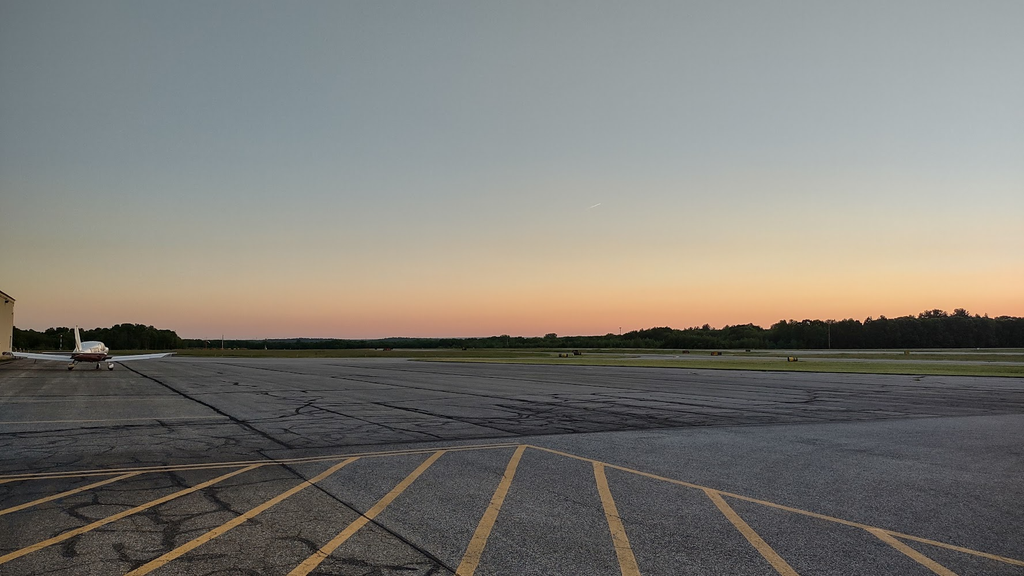
North Central State Airport
3. Electromagnetic Interference (EMI) and Avionics Hazards: North Central State Airport
The proposed Route 116 corridor lies directly within the terminal approach and departure environment of North Central State Airport
- High-Energy Electromagnetic Interference (EMI): Multi-megawatt substations, high-voltage switchgear, massive variable-frequency motor drives (VFDs), and dense switching power supply arrays generate wideband electromagnetic fields and harmonic distortion.
- Navigational Degradation & Instrument Approach Risks: Unmitigated EMI introduces acute interference risks to VHF Omni-Directional Range (VOR) beacons, Instrument Landing System (ILS) localizer/glideslope signals, and GPS/WAAS satellite acquisition. Any signal corruption risks blinding cockpit avionics during low-visibility operations, stripping pilots of precision instrument guidance and forcing emergency Visual Flight Rules (VFR) transitions in restricted airspace. A comprehensive Federal Aviation Administration (FAA) Part 77 airspace evaluation and rigorous EMI radio frequency propagation study are mandatory before any structural approvals can proceed.
4. Conclusion & Regulatory Mandate
The proposed Smithfield data center cannot achieve “ecological neutrality” under current site parameters. Placing continuous thermal, electrical, acoustic, and chemical burdens across an environmentally stressed hydrologic saddle creates significant long-term municipal liabilities while delivering negligible civic value.
The Town Council, Planning Board, and the Rhode Island Department of Environmental Management (RIDEM) should decline all requested zoning amendments and special use permits until:
- A multi-agency Environmental Impact Statement (EIS) under RIDEM and USACE oversight is completed, explicitly modeling thermal discharge against 2026 cyanobacteria advisory baselines.
- An FAA/FCC Joint Electromagnetic Compatibility Study verifies zero interference with North Central State Airport
- The developer executes a binding, non-recourse infrastructure bond fully indemnifying municipal ratepayers and local fire districts against grid upgrades, hazardous materials equipment procurement, and catastrophic secondary containment failure.
Addendum: Technical Specifications for Offshore Siting, Infrastructure Isolation, and Marine Thermodynamic Alternatives
A.1 Thermodynamic Decoupling & Closed-Loop Marine Heat Exchangers
- Elimination of Freshwater Evaporative Losses: Transitioning high-density compute clusters from terrestrial recharge zones to marine platforms utilizes open-ocean water bodies as near-infinite thermal sinks, operating via titanium plate closed-loop secondary heat exchangers.
- Aquifer & Recreational Buffer Preservation: Moving thermal dissipation offshore prevents the discharge of millions of BTUs into fragile inland swales, eliminating the surface thermal stratification that accelerates cyanobacteria blooms in shallow water bodies (e.g., Georgiaville Pond, Stillwater Reservoir) and protecting municipal wellhead recharge areas from thermal-jet disruption.
- Subsurface Hydraulic Protection: By avoiding artificial thermal gradients on land, regional groundwater temperatures remain stable, eliminating the thermodynamic triggers that increase the solubility, unbinding, and accelerated migration of legacy contaminants from upstream and downstream Superfund corridors (such as the Centredale Manor restoration zones).
A.2 Independent Microgrid Architectures (Offshore Wind & SMR Integration)
- Direct High-Voltage Interconnection: Colocating compute facilities with offshore wind transmission corridors or deploying dedicated Generation-IV Small Modular Reactors (SMRs) insulates the local sub-transmission system from severe industrial load steps.
- Grid Decoupling & Ratepayer Protection: Siting generation and compute offshore prevents non-coincidental base loads from entering ISO New England’s constrained Rhode Island delivery corridors. This stops utility rate-base socialization, ensuring residential and commercial ratepayers do not subsidize 115 kV line rebuilds, substation upgrades, or transmission tariffs.
- Passive Safety Architecture: Modern SMR installations operate under strict NRC design parameters featuring passive, gravity-driven cooling systems. These systems maintain core stability without reliance on off-site AC power, eliminating terrestrial diesel belly-tank fuel farms and associated groundwater contamination risks.
A.3 Hazard Containment & Municipal Liability Insulation
- BESS Isolation: Battery Energy Storage Systems (BESS) and high-voltage Class C electrical gear deployed on maritime structures contain thermal runaway hazards within isolated structural cells equipped with automated seawater deluge and inert gas suppression (e.g., Novec/Inergen).
- Zero Municipal Fire District Burden: Removing specialized industrial electrical hazards from small municipalities eliminates unfunded mandates for volunteer fire departments, removing the need for costly HAZMAT mutual-aid equipment, foam tenders, and advanced high-voltage training programs.
- Deterministic Workload Management: Incorporating dynamic power-signature workload shaping allows operational priority to be directed toward high-value scientific and public-interest compute pipelines while automatically throttling non-essential extraction loads during periods of grid or resource stress.
“Methodology Note: All hydrological data, spatial mapping, and infrastructure parameters were independently compiled and verified by the author. Large-language model tools were utilized strictly for text structural formatting, synthesis, and typographical composition as an assistive interface.”
“Operational impact parameters and resource draw baselines reflect empirical, multi-facility operational averages derived from established high-density compute corridors rather than non-binding applicant design estimates.”